
Duo and Trio Strategy in Rust: Roles, the First Hour, and Shared TC
Duo and trio strategy in Rust: role division, first-hour plan, shared Tool Cupboard, loot rules, and combat communication. How to play effectively as two or three.
9 min read · 1,658 words
Introduction
Duo and trio is the most efficient format in Rust in terms of "results per player." Two players farm twice as fast as one, hold defense from two angles, and don't lose all progress if one dies with key loot. Three is already a full combat unit: one holds the door, two work the flank.
But a small team amplifies mistakes too. If one of the two throws away a kit on a stupid fight, the team loses half its combat power. If both go farming in the same direction, the base sits empty. Duos and trios win through coordination, not numbers — and coordination here isn't about voice chat, it's about pre-agreed roles and rules.
This guide covers role division, a minute-by-minute first-hour plan, working with a shared Tool Cupboard, loot rules, and combat communication. Everything below works for both two and three players.
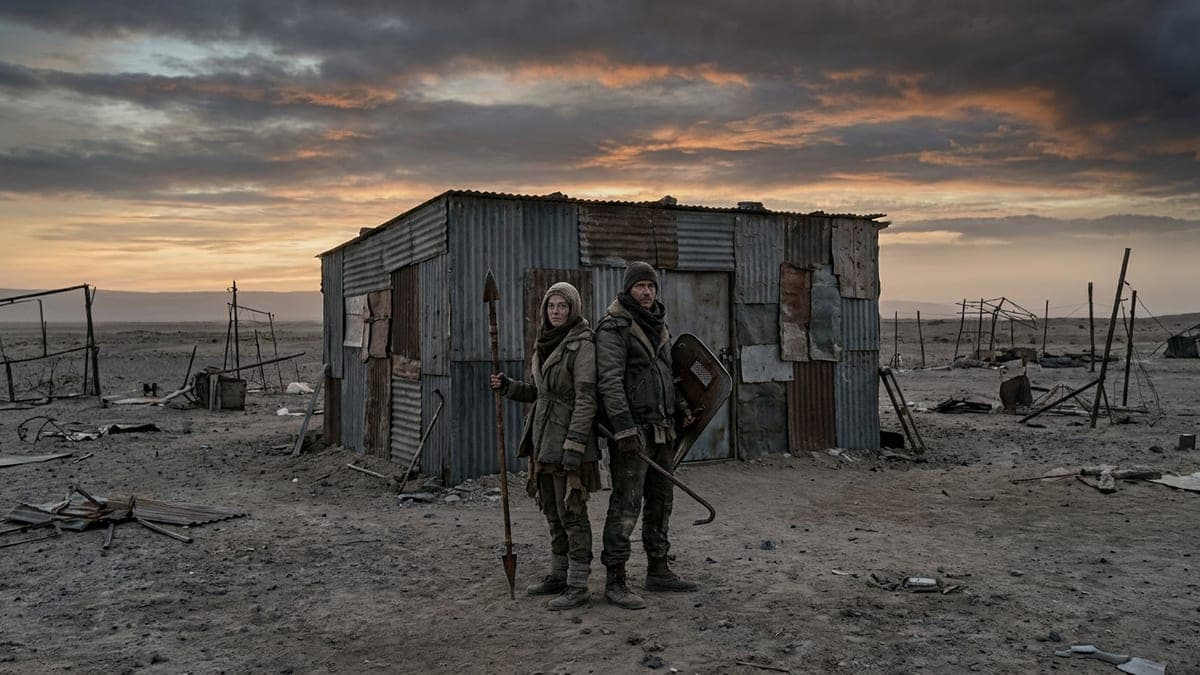
Roles: Who Handles What
Roles in Rust aren't classes, they're areas of responsibility. Everyone can do everything, but one specific person is accountable for each task.
Builder. Handles the base: layout, upgrades, honeycomb, airlock, upkeep. He has the full blueprint in his head, and he decides when to expand. Key rule: one person builds. Two pairs of hands on one foundation means crooked walls and a hole in the honeycomb nobody remembers.
Farmer. Handles the resource flow and is the first to notice the TC is empty. In a duo, this is the one who isn't building; in a trio, it's a dedicated person who barely PvPs in the first day.
Roamer / Fighter. Handles intel and monument loot: who the neighbors are, where bases are, where shots come from. He's also the first pick in fights. In a trio, this is the third player; in a duo, the role is shared situationally.
Also lock down three things: who handles electricity and turrets (it's a separate skill, and one person should figure it out), who keeps the raid "books" (how much sulfur is banked, how much explosive is needed, when we go), and who talks to neighbors — otherwise you'll make contradictory promises and start a war.
Roles shouldn't be permanent. Swap them between wipes: a team where everyone can build and raid survives losing any member.
First-Hour Plan
The first hour of a wipe decides the week. Below is a working sequence for two or three. Timings are approximate; the order matters.
Minutes 0-5. Spawn and gather. Figure out where everyone is via coastline landmarks and agree on a meeting point on the map. Pick up everything on the ground along the way.
Minutes 5-15. Tools and initial farm. Each player makes a stone hatchet and pickaxe and farms along the way. No need to wait for each other — time is worth more.
Minutes 15-25. Choosing a spot. The builder makes the call, but everyone looks. Criteria: resources nearby, not on a road or beach, an escape route exists, other small bases nearby (you blend in among them). Arguing about the spot for more than two minutes is already a loss.
Minutes 25-40. Starter base. The builder places the foundation, walls, TC, and door; the others haul wood and stone. The builder places the TC, the others walk up and press E — authorization is individual for each player.
Minutes 40-60. Sleeping bags and upgrade. Each player places their own sleeping bag (30 cloth) — it's a respawn point and insurance against losing your position. In parallel, upgrade walls to stone and add a second door.
After the hour. The team splits: the builder finishes the honeycomb, the farmer goes for metal and sulfur, the roamer heads to the nearest monument for components and scrap.
The biggest first-hour mistake is going all together in one direction: you lose the format's main advantage, parallelism.
Shared Tool Cupboard: How Not to Blow Yourself Up
The TC is both the heart of the base and the main trust point in a team.
How it works. Building privilege projects from the structures, not the cabinet itself. Each player authorizes in the TC individually by walking up and pressing E. Any authorized player can both grant access to someone else and wipe all authorization entirely — including yours. This is a built-in betrayal mechanic, and you need to know about it in advance.
Practical rules:
- Only authorize people you know. A random player you "let in for the night" can clear the TC and take the whole base.
- Top up upkeep by the rule "came in — deposited." Everyone who enters the base puts resources in the TC, not just the "responsible one."
- Watch the upkeep material. A stone base with metal doors needs both stone and metal fragments. An empty slot for one material and the corresponding blocks start decaying: wood — 3 hours after depletion, stone — 5, sheet metal — 8, armored — 12.
- Second TC for external structures. External walls and extensions are convenient to keep under a separate cabinet: authorization in the main base doesn't grant access to the whole perimeter.
- Agree in advance what happens in a conflict. Who takes the base if the team splits mid-wipe? Discussing this with a clear head is cheaper than after someone walks off with all the loot.
Loot rules are the second source of conflict. A working scheme: a shared box for resources (wood, stone, metal, sulfur, scrap) accessible to everyone, and a personal box for each player's kit. Explosives are only spent by a team decision.
Communication: What to Say and How
Bad communication isn't silence — it's a stream of useless words.
Enemy report format: direction → distance → what he has → what you're doing.
Bad: "There's a guy, help!" Good: "One, north of the rock, about forty meters, in metal with AK, I'm behind the stone, don't come out the door."
Rules that save lives:
- One piece of info — one message. Don't tell a story while someone's shooting at you.
- Use a single direction system. Agree in advance: cardinal directions or landmarks ("from the tower," "from the water"). Mixing them is forbidden — "right" for two players is two different places.
- Report your status. "Twenty HP, falling back" is a command for your teammate to shift position, not a complaint.
- Stay quiet when your teammate is in a fight. He can't shoot and listen to a recap at the same time. Only critical info: "second one coming in from the left."
- After the fight, do a short debrief. Thirty seconds after a death teaches more than an hour of recoil practice.
Tools. The team interface shows allies as markers on the map and in the world, plus their health in the corner of the screen: green dot — alive and online, gray — offline, red — dead. A team is created with a button in the inventory, and invites are done by walking up and pressing E. The standard limit is 8 players, but admins lower it for solo/duo/trio modes.
For duos and trios, external voice chat is more convenient than in-game: Rust's proximity chat has an unpleasant quirk — an enemy nearby hears everything you say.
Common Mistakes of Small Teams
- Everyone went farming, the base is empty. During prime time, someone should stay near the base.
- Both died in one fight with full kits. Don't enter a fight through the same door, and don't both run to grab a body: one dies — the second preserves the loot and position.
- Building together. You get a crooked base with holes in the honeycomb.
- Raid impulsively. Raid decisions are made together, with the calculated raid cost.
- Expanding outward faster than upkeep grows. A big base for two is work instead of play.
FAQ About Playing as Duo and Trio
What's the optimal player count for a small team?
Three is the most stable format: one holds the base, two work outside, and losing one player doesn't paralyze the team. A duo is faster and stealthier, but has no buffer: if both die with kits, the wipe effectively restarts. If you're playing as two, compensate with discipline — never risk both kits at once.
Do duos and trios need to create a clan?
No. The clan system with a Clan Table is for large groups that need roles, permissions, and shared management. For two or three people, a regular team is enough: it gives map markers, ally health, and team chat, and it's created with a button in the inventory in seconds. Extra structure for three just adds hassle.
How do we split loot without fighting?
Separate storage: a shared box for resources and explosives, a personal one for each player's kit. Shared items are only spent by joint decision, personal items are never touched. Also agree in advance what happens to the base and supplies if someone leaves the team — that conversation before a conflict costs less than after.
What if one teammate plays noticeably less?
Give him a role that doesn't require prime-time online: builder and upkeep "treasurer." He logs in, tops up the TC, finishes walls, and leaves — while active players handle farming and PvP. The problem isn't different playtime, it's the feeling that someone is carrying everything: fixed roles solve that.
Conclusion
Duos and trios are strong not by numbers, but because three people can do three different things at once. Lock in roles, drill the first hour to muscle memory, agree on TC and loot rules in advance — and you'll outpace groups twice your size in progress.
Everything else is discipline: don't all leave at once, don't lose both kits in one fight, top up upkeep on every visit, talk in short facts during combat. A small team with rules survives to the end of the wipe more often than a ten-man clan without them.
Sources: Rust Wiki (wiki.facepunch.com — Teams, The Tool Cupboard), corrosionhour.com (RUST Team Guide), rust.facepunch.com (The Team Update), r/playrust (duo/trio strategy threads), community guides 2024-2026.