
Hunting in Rust: Animals, Their Loot, and How Not to Die to a Bear
Hunting in Rust 2026: boar, stag, wolf, and bear — health, danger, and what each animal drops. What to kill with, what to butcher with, and how to hunt safely.
9 min read · 1,660 words
Introduction
Hunting in Rust isn't about meat. You can find meat anyway: in barrels, at vendors, on a farm. Hunting is for cloth, leather, bones, and animal fat — four materials that early in the wipe only come from corpses, and you need them for basically everything: sleeping bag, bandages, clothing, arrows, fuel for the furnace and torch.
The problem is that hunting is the most underestimated way to die. A newbie who confidently builds a base and avoids roads gets caught by a bear in the forest and loses all their farm in three hits. A boar seems harmless until you find out it doesn't run away — it turns around. Wolves travel in packs and catch up to players in open fields.
This guide covers where each animal spawns, how much health they have, what they drop, what to shoot and butcher with, what tactics work against each beast, and what to do with the loot.
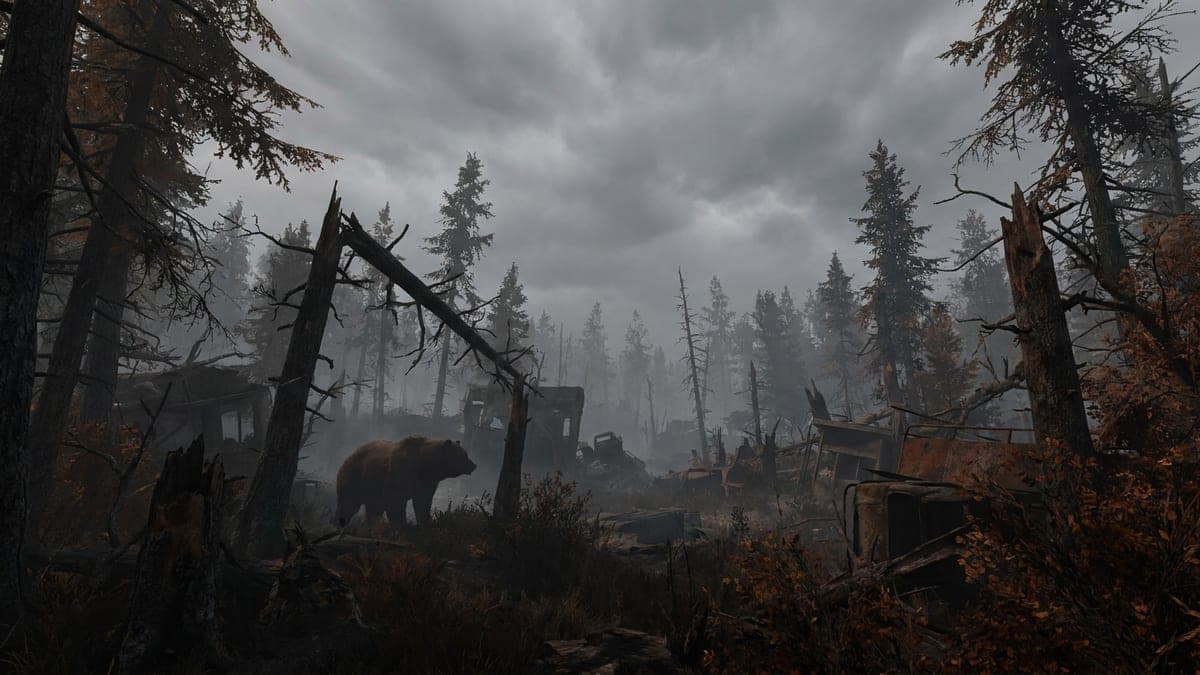
What Spawns and How Dangerous It Is
The values below are from reference data as of 2026; numbers may shift after patches, but the relationships between animals have been stable for years.
| Animal | Health | Behavior | Danger |
|---|---|---|---|
| Chicken | around 20-25 | passive, flees | none |
| Stag | around 150 | passive, always flees | none |
| Boar | around 150 | aggressive when attacked | low |
| Wolf | around 100 | aggressive, moves in groups | medium |
| Bear | around 400 | aggressive, pursues | high |
| Polar Bear | around 420 | aggressive, snow biome | very high |
| Shark | around 150 | attacks underwater | high for divers |
Key takeaways:
- A wolf has less health than a boar but is more dangerous. A boar is alone; wolves are not.
- A bear has 2.5-3 times more health than any other land animal, hits harder than anything else, and accelerates in bursts faster than a player. You can only kill it with a bow from a cliff.
- Stags are completely harmless and give more cloth and leather than boars. The most profitable target for a newbie.
- The polar bear in the snow is not a hunting target — it's a reason not to go there without a weapon.
What Each Animal Drops
Almost all animals drop the same set: their type of meat, animal fat, bone fragments, cloth, and leather. The difference is in quantity and meat type.
- Boar — raw pork, fat, bones, cloth, leather. The most fat among small game.
- Stag — venison, fat, bones, and noticeably more cloth and leather than a boar. The best solo target early on.
- Wolf — wolf meat and the same set. You don't hunt wolves for resources — only in self-defense.
- Bear — the best loot by volume: bear meat, lots of leather, cloth, bones, and fat from one carcass. One bear covers your cloth needs for several days.
- Chicken — chicken breast, a bit of cloth and bones. No fat.
Practical takeaway: if you need cloth and leather — shoot stags, if you need volume and you're armed — a bear pays for its ammo, if you need fat — go for boars. A chicken is a snack, not a hunt.
Butchering is done with a sharp tool: bone knife, hatchet, pickaxe. The sharper the tool, the more resources you get from the same carcass — you can butcher with a rock, but you're losing loot. A bone knife costs a few bone fragments and should be in any player's inventory when heading into the forest.
What to Kill With
- Bow with wooden or bone arrows — the day-one staple. Works on stags, boars, and chickens. Against bears — only from an unreachable position.
- Spear — works up close and can be thrown. Fine against boars, risky against wolves, a death sentence against bears.
- Crossbow — stronger than the bow, slow to reload. Good for one precise shot on a stag.
- Firearms — the fastest way, but ammo costs more than the meat. Shooting a boar with an AK is pointless; a revolver or shotgun is acceptable.
Economy rule: take a bow for game, take something that can actually stop a bear. Going back for your body after a failed attempt costs more than showing up with proper gear in the first place.
Safe Hunting for Each Animal
Stag. Passive, reacts to movement and sound, flees in a straight line. Approach crouched, through bushes, shoot the body. A stag won't drop from one arrow, but a wounded animal doesn't run far. Don't sprint after it: you'll burn calories and find something aggressive along the way.
Boar. A boar doesn't flee — it turns around and attacks. Damage is low, but a series of hits easily takes half a newbie's health. Hit and circle away: boars turn poorly. Use a tree or rock as a pivot — by circling an obstacle, you shake it off. Spear up close and a step back is the standard day-one combo.
Wolf. Wolves pursue players and are rarely alone. The main mistake is running: in an open field you won't outrun them and you'll take bites to the back. Find high ground, a rock, or a structure — from height, a wolf can't reach you, and you can calmly shoot it with a bow. Without a weapon, water saves you: wolves lose their speed advantage there. At night they're more dangerous — visibility is worse, and you hear them too late.
Bear. The main cause of lost loot in the forest: it accelerates in bursts faster than a player, hits very hard, and has so much health that "finishing it off" while running isn't possible.
- Never engage a bear on flat ground. That's not a fight, it's a race you'll lose.
- Shoot from a cliff, a roof, a ledge, or a base window. A bear can't climb up, and you can calmly shoot it even with a bow.
- If a bear spots you on flat ground — run diagonally to the nearest rock or building: a bear's burst is short, and turns throw it off.
- Don't butcher a carcass with your back to the forest. Butchering takes time, and a second bear or player shows up exactly at that moment.
- In the snow biome, you'll find polar bears — tougher and stronger than regular ones. Don't go there without a firearm.
And the main thing: the most common death while hunting is not from an animal, but from a player who heard your shots. A bow is quiet; gunfire carries for hundreds of meters. Hunt away from roads and monuments, and don't linger at a carcass.
What to Do with the Loot
Meat. Cook it on a campfire — raw meat gives few calories and can cause food poisoning. Don't overcook it: burnt meat is nearly useless.
Animal fat. The most valuable thing after cloth. The formula you need to memorize: 3 animal fat + 1 cloth = 4 Low Grade Fuel. Fuel is needed for torches, lamps, furnaces, vehicles, and incendiary ammo.
Cloth. Goes into sleeping bags, bandages, clothing, arrows, and that same fuel. Until you have a hemp farm, hunting is the main source of cloth.
Leather accumulates on its own; you don't need to hunt specifically for it. Bone fragments go into bone knives, clubs, arrows, and armor; a cheap bone knife pays for itself instantly because it increases resource yield from every subsequent carcass.
Efficient route: forest near your base → 2-3 stags and a boar with a bow → butcher with a bone knife → campfire. That's 10-15 minutes that covers food, cloth, and fuel for a couple of in-game days, and you never touch a road.
FAQ
Which animal is the most profitable to kill?
By resource volume — the bear: one carcass gives more meat, leather, cloth, and bones than any other animal. But it's dangerous and requires proper weapons and positioning. By risk/reward for a newbie, the stag wins: it's completely harmless, gives more cloth and leather than a boar, and dies to a regular bow.
How do I kill a bear without a firearm?
Only from a position it can't reach: a cliff, a large rock, a ledge, a foundation roof, a base window. Climb up, get its attention, and shoot it with a bow — a bear has around 400 health, so you'll use a lot of arrows, but there's zero risk. Trying to kill a bear on flat ground with a spear or bow is almost certain death.
What do I butcher an animal carcass with?
Any sharp tool: bone knife, hatchet, pickaxe. The key point is — the sharper the tool, the more resources you get from the same carcass, so butchering with a rock is a bad deal. A bone knife is crafted from bone fragments, costs almost nothing, and should always be in your inventory.
What do I do with animal fat?
Turn it into fuel: 3 fat and 1 cloth give 4 units of Low Grade Fuel. Fuel is needed for the torch, lamp, furnace, vehicles, and incendiary ammo, and early in the wipe, hunting is the most accessible source. There's no point leaving fat in a box: on its own, it's nearly useless.
Conclusion
Hunting in Rust pays off not with meat but with materials: cloth, leather, bones, and fat from stags and boars cover your sleeping bag, bandages, arrows, and fuel in the first days of the wipe, when there's no farm yet and barrels give you everything except cloth. A bone knife and a bow are the entire kit you need.
The safety rules come down to three points: don't engage a bear on flat ground, don't run from wolves across an open field, don't linger at a carcass. And remember the main thing — the most dangerous animal in the forest is the player who heard your shot.
Sources: wiki.facepunch.com (Rust wiki), rustly.com/npcs (animal HP and damage), lone.design (RUST Animals Guide: Loot, Damage, Health), falconrust.com (Guide to Animals and Hunting), rusthelp.com (Low Grade Fuel) 2024-2026.