
Transport in Rust: Horses, Cars, Boats and Helicopters — Guide 2026
Transport in Rust 2026: where to get a horse, car, boat and helicopter, how much scrap it costs, what to fuel with, how to repair and where to store so you don't lose your vehicle.
9 min read · 1,618 words
Introduction
Playing Rust on foot is twice as slow. The run to a monument, the trip back with a full backpack, the outing to a fishing village for a map — all of that is hours of running that transport turns into minutes. The difference between a player with a minicopter and one without isn't "convenience" — it's the number of runs you can do per evening.
But transport in Rust is also the fastest way to lose scrap. A car gets stolen while you're inside a monument. A helicopter gets shot down by SAM sites and the patrol helicopter. A horse starves to death in a couple of days without care. So the question "where to get it" always goes hand in hand with "where to store it."
Below is all ground, water and air transport: prices, fuel, repairs, storage and the typical ways to lose all of it.
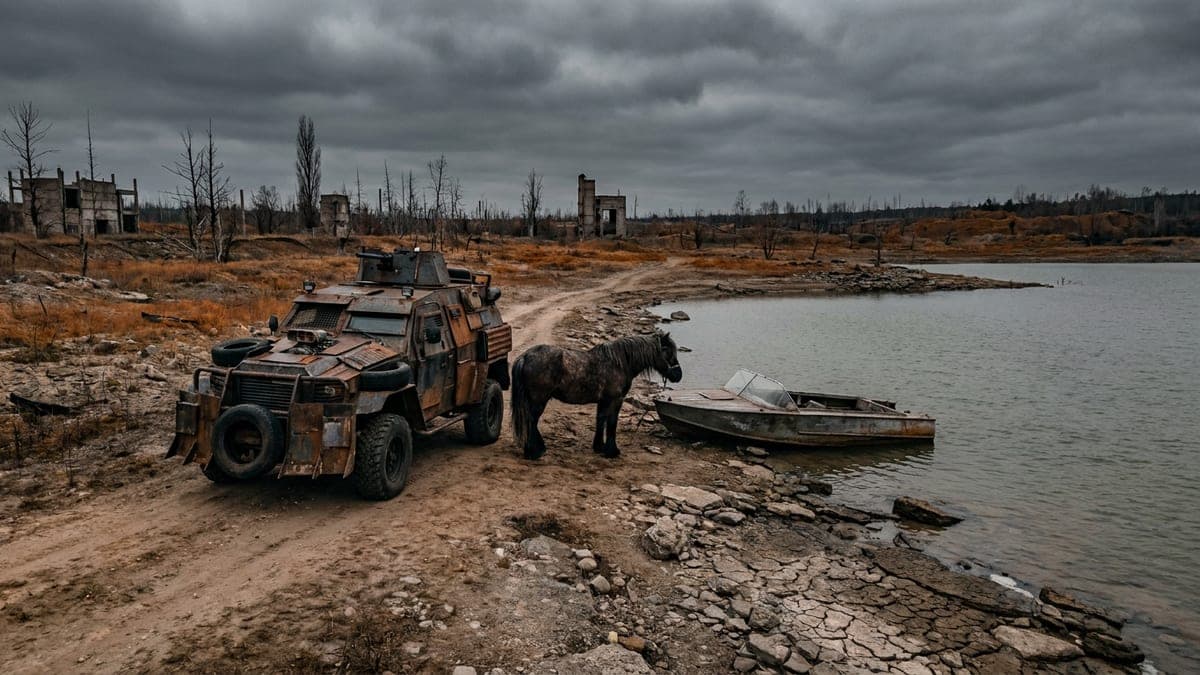
Horse: the cheapest transport in the game
The horse is the first transport realistically available by day two of a wipe. Horses spawn in the world in warm biomes, and at the Ranch and Large Barn monuments there are horse traders who sell saddles: single saddle — 75 scrap, double (for two riders) — 90 scrap.
Key stats to know:
- Health — 400, stamina pool — 30. Stamina drains on gallop and regenerates at a walk.
- Speed depends on the breed and sits roughly in the 42-58 km/h range for a well-fed horse. Before you take a horse, check its stats — the difference between a slow and a fast horse is very noticeable.
- Armor. Wooden armor gives about 25% damage reduction and adds storage space; road sign armor gives about 50% but noticeably cuts speed. Horseshoes give a speed boost with no penalties.
Feeding and storage. Horses have a despawn timer, and a horse left in the field will disappear after a few hours. The solution is a Hitch & Trough: a tethered horse eats from the trough and lives for a very long time. Fill the trough with high-calorie food — potatoes, pumpkins — and the horse will easily survive your break of several days.
Horse pros: no scrap needed to buy the transport, no fuel. Cons: it doesn't protect you from bullets, and a rider is a big, stationary target on the road.
Modular Cars: assembly, parts and fuel
Cars in Rust are assembled, not bought whole. The basic logic:
- Chassis for 2, 3 or 4 modules spawns on roads and at road monuments. A bare chassis is useless.
- Modules (cab, cargo, passenger seats, storage module) are mounted on the chassis via the Work on Vehicle function at a Modular Car Lift — a lift that needs electricity.
- The engine requires five types of parts: carburetor, crankshaft, pistons, spark plugs and valves. Each part comes in three quality tiers — low, medium and high.
Key point: for the car to start, you only need one part of each type at any quality. Quality affects not whether it starts, but speed and fuel consumption. Low-quality parts are found in barrels and at road monuments; medium ones are sold by the vendor on the second floor of Air Wolf in Bandit Camp (pistons, valves and spark plugs — 50 scrap each, carburetor and crankshaft — 75; the lift itself is also sold there for around 175 scrap).
Fuel — Low Grade Fuel, same as all motorized vehicles. The modular car's tank holds up to 500 units. Repairs of minor damage to the chassis and modules are done with a hammer and metal fragments; serious damage is fixed at the lift.
The car is the best option for hauling volume: the storage module carries more than any helicopter can.
Boats and Submarines
Water is a separate transport network, and entry into it is cheap.
| Transport | Health | Where to get | Features |
|---|---|---|---|
| Rowboat | ~400 | spawns on shore, fishing village | 4 seats, small storage, minimal fuel use |
| RHIB | ~500 | fishing village | 6 seats, more storage, noticeably more powerful |
| Solo Submarine | ~500 | fishing village, around 200 scrap | 1 seat, access to underwater labs |
| Duo Submarine | ~700 | fishing village, around 300 scrap | 2 seats, torpedoes |
| Tugboat | ~3000 | found in the open ocean and claimed | floating base with room for building |
The Rowboat is the workhorse: you can often find it free on the shore, and it easily gets you to Small Oil Rig. The RHIB is faster and roomier, but costs more and is more visible. Submarines are a specialized tool for ocean monuments. The Tugboat stands apart: it's the only transport that's also a base — you can build inside it and place a Tool Cupboard.
All water vehicles run on Low Grade Fuel; the tugboat has the highest consumption, so using it "just for a ride" is expensive.
Air: Minicopter, Scrap Heli and Attack Helicopter
Helicopters are bought from Air Wolf in Bandit Camp. Base prices:
- Hot Air Balloon — 150 scrap
- Minicopter — 750 scrap
- Scrap Transport Helicopter — 1250 scrap
- Attack Helicopter — 2250 scrap
Important caveat: with the introduction of dynamic pricing for NPC vendors, prices fluctuate based on demand on a given server. The values above are base references, not constants — check the price tag on site.
The Minicopter is the best value transport in the game by "price / time saved." Two seats, low fuel use, lands anywhere. The Scrap Heli carries more people and loot but is bigger and slower to react. The Attack Helicopter is no longer transport but a weapon: it's taken for raids and monument control, and losing it hurts.
The Hot Air Balloon is an underrated solo option: cheap, drifts with the wind, great for a one-way drop on Small Oil Rig or a distant monument.
Fuel, Repairs and Storage
Fuel. All motorized vehicles run on Low Grade Fuel. It's refined from crude oil at a Small Oil Refinery, and oil is gathered from barrels, pump jacks and oil monuments. Practical takeaway: having your own refinery at base is mandatory if you own transport.
Repairs. Cars and modules are fixed with a hammer and metal fragments; serious damage — at the lift. Boats and helicopters are repaired at a repair bench, which requires the appropriate materials. Don't put off repairs: a damaged helicopter at half health falls apart from one accidental collision.
Storage — the most important part. The rules:
- Don't leave vehicles outside. Anything sitting in an open field either gets stolen or decays over time.
- Build a garage. High external walls, a garage door or a simple walled box completely solves the theft problem.
- Lock your car. Modular cars can be locked, and it's the only transport with full anti-theft protection.
- Bring the helicopter inside your base or into an enclosed courtyard. A minicopter fits in a small box if you plan the height right.
- Horses go on a hitch only. A trough with potatoes — and the horse will wait for you.
Risks: how vehicles are most often lost
- SAM sites. Enemy bases with anti-air turrets shoot down helicopters on approach. A route through a dense built-up area is almost guaranteed loss.
- Patrol helicopter. It flies toward noise and targets in the air. A minicopter doesn't survive against it.
- Theft at monuments. You're inside the building — your vehicle is outside. Move it off to the side and hide it behind terrain, don't leave it at the entrance.
- Collisions. Half of lost minicopters aren't PvP — it's trees and rocks on landing.
- Decay. Vehicles outside a Tool Cupboard zone decay over time. A RHIB forgotten in the woods won't wait for you forever.
FAQ
Which transport should I get first?
A horse by day two or three (saddles cost 75-90 scrap from the horse trader, no fuel needed), then a minicopter once you've saved up around 750 scrap. A car makes sense when you already have a lift and steady access to engine parts, and a boat when you're heading to water monuments.
What do I fuel vehicles with and where do I get fuel?
Everything motorized runs on Low Grade Fuel. It's made by refining crude oil in a Small Oil Refinery; oil is gathered from barrels, pump jacks and dedicated monuments. Your own refinery at base pays for itself as soon as you get your first vehicle.
Can I protect my vehicle from theft?
Fully — only the modular car: it takes a lock. Everything else is protected physically: garage, high external walls, enclosed courtyard. A helicopter left in a field isn't your helicopter — it's the helicopter of whoever walks by next.
Why do Air Wolf prices differ from what I saw in guides?
Because NPC vendors use dynamic pricing: the price changes based on demand on a given server. Numbers like 750 scrap for a minicopter or 2250 for an attack helicopter are base references. Always check the price tag at the vendor itself.
Conclusion
Transport in Rust pays off in time: one minicopter saves more hours over a wipe than it costs in scrap. But the winner isn't the one who bought the vehicle — it's the one who kept it. Horse — on a hitch with a trough, car — locked in a garage, helicopter — inside the base, boat — not abandoned at a monument.
Start cheap: a horse and a rowboat cost almost nothing and already change the pace of the game. Then save scrap for a minicopter — that's the moment the Rust map stops feeling long.
Sources: Rust Wiki (wiki.facepunch.com), Corrosion Hour (guides on horses, modular cars, Air Wolf, RHIB), Rustafied (Modular Vehicles Guide, vendor updates), Rustly (Boats Guide), rust.facepunch.com/news (Stables Update, Boat Vendor Update).